Cold on the ward or in the office? How to dress warmly while maintaining a professional appearance
You know that feeling when the air conditioning in your office is working all too well and the chill from the hospital corridor seeps into your bones? In the winter, maintaining thermal comfort at work can be a real challenge – especially when you are bound by a professional dress code. A plain, thick sweater is often out of the question. So how do you reconcile the need to keep warm with the demands of aesthetics and functionality? The key is to be smart about your closet! In this article we’ll give you tips on how to dress warmly, comfortably and still look stylish.
Table of Contents:
- The art of layering, or dressing “onion” in the pro version
- Materials that provide warmth and comfort
- Stylish and warm medical closet items
- Details matter – color and cut vs. professional image
- Avoid these mistakes to feel and look great
- FAQ – frequently asked questions and information in a nutshell
The art of layering, or dressing “onion” in the pro version
Wearing one thick garment most often does not work. Such an outfit restricts movement and makes you too hot in warmer areas. The secret is smart layering – it’s the best way to flexibly adapt to changing temperatures throughout the day. How do you do this in a medical environment? STRAIGHT!
Base layer – start with a thin but warm layer close to the body. A medical longsleeve for women black, made of breathable materials, will be ideal here. Such a piece of clothing will provide additional insulation without restricting movement. The material is excellent at wicking away moisture, which is key during intensive work.
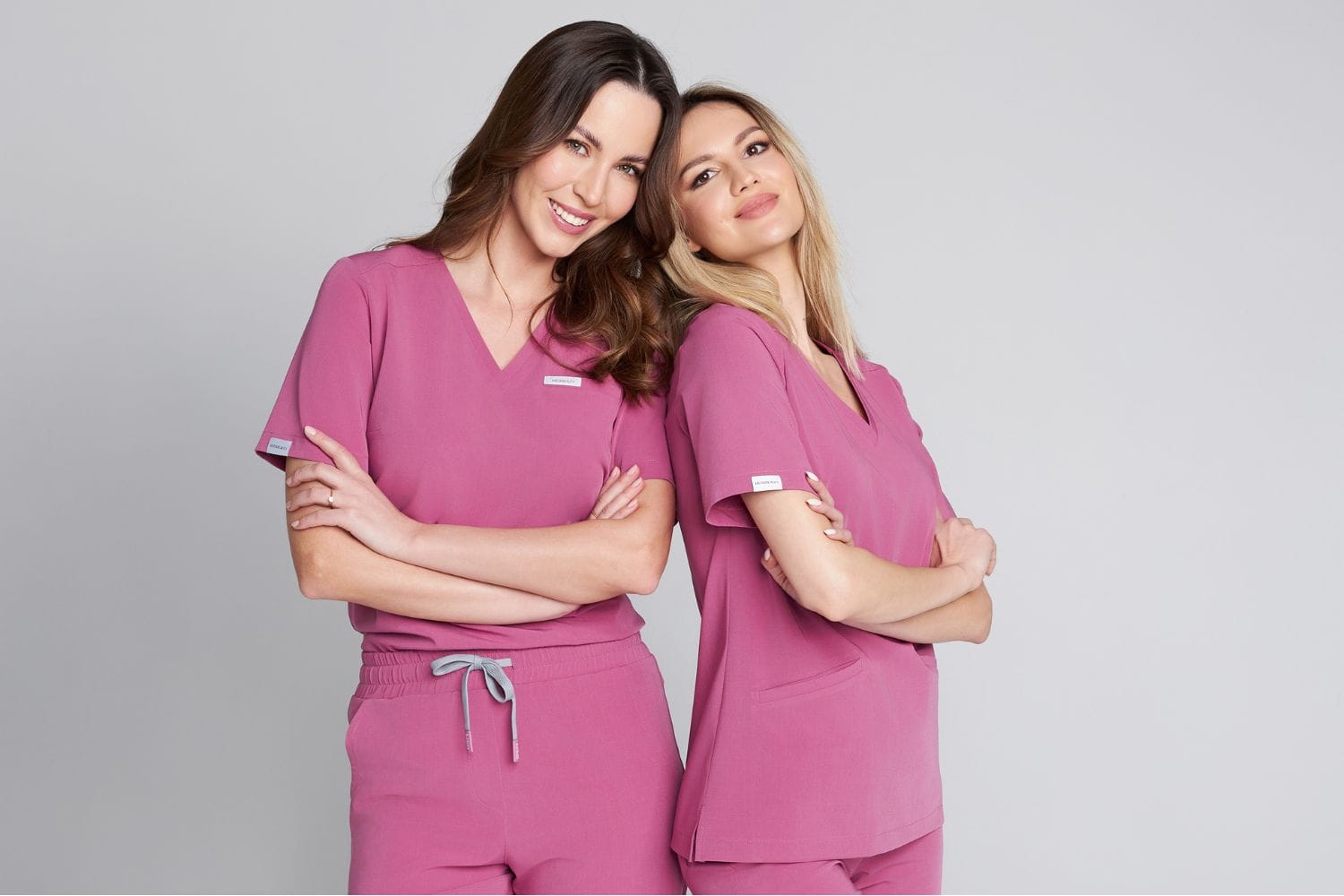
The middle layer – is your standard uniform – scrubs, medical envelope tunic or tasteful set.
Outer layer – when the chill really gets the best of you, throw an extra layer over your scrubs. This can be a warm women’s medical jacket or a soft-touch fleece sweatshirt. It is important that the bedspread can be removed when it gets warmer.
With this approach, you gain full control over your thermal comfort throughout the workday.
Materials that provide warmth and comfort
Not every fabric is made to fight the cold. When choosing medical clothing, pay special attention to its composition. It is the material that determines whether you will be warm and comfortable. Look for garments made of high-quality blends that combine the best qualities of different fibers.
Breathable and flexible fabrics, such as cotton/polyester blends, are always a good choice. Cotton provides breathability and is gentle on the skin. The addition of polyester makes a hospital duty outfit more durable, flexible and crease-resistant.
Modern medical garments are designed to wick away moisture fantastically to maximize comfort. Remember to adjust the thickness of the fabric according to the ambient temperature. Opt for a fabric that breathes, but will also keep you pleasantly warm – especially if you spend most of the day in a sitting position.
Stylish and warm medical closet items
Keeping warm doesn’t have to mean giving up style! Modern collections of medical and cosmetic clothing offer many solutions that are both functional and aesthetically pleasing.
Medical blouses and jackets
In colder weather, go for specially designed medical jackets or longer-sleeved sweatshirts that will ensure thermal comfort. Choose models in subdued colors that will blend perfectly with the rest of the uniform. Details such as high-quality seam finishing, convenient fastenings or practical pockets determine everyday comfort.
Medical dresses and tunics
An alternative to classic sets are medical dresses. This is a great solution that combines comfort and professional appearance. When choosing medical clothes for spring or autumn, pay attention to models made of slightly thicker, but still breathable fabrics. Under the dress you can wear the aforementioned longsleeve, creating a cohesive and warm set. Medical tunics juxtaposed with pants also provide ample room for creating layered, comfortable styles.
Details matter – color and cut vs. professional image
Your outfit at work is your business card – even when fighting the cold, you must remember to maintain a professional image. The right cut and color scheme allow you to express your individual style while maintaining workplace standards. Even small touches affect the comfort of a beauty salon or office. In autumn and winter, deeper, subdued colors such as burgundy, dark green, navy blue or shades of gray work well.
Increasingly, the stereotypical image of a medical worker is being abandoned. White aprons are being replaced by colorful, stylish and functional medical clothing. Details such as elastic waistband, discreet pockets or press studs instead of buttons keep the outfit elegant, but at the same time fully functional. Also keep in mind the rules of your facility – often the dress code in the medical industry is strictly defined by the management. This arrangement is designed to make it easier to identify staff and build a consistent image of the institution.
FAQ – frequently asked questions and information in a nutshell
What is the best thing to wear under a uniform to combine thermal comfort and a professional appearance?
- Choose a thin, breathable base layer (such as a plain cotton/lycra top or a mix of polyester and viscose) that does not alter the lines of the uniform. On top of that, a lightweight insulating layer – a thin sweater or fleece with a tailored fit – and an outer medical jacket of formal cut that is easy to remove when changing rooms.
How to wash and care for premium (cotton, nylon, lycra) and basic (polyester, viscose, lycra) clothing?
- Clean your outfit before first use. Wash it at 40°C with similar colors, use mild detergents, avoid bleach and tumble dry. Iron on the left side at a temperature not exceeding 110°C. Following these rules prolongs the life of fabrics and helps maintain thermal insulation properties.
Are extra layers (e.g., fleece, chimney) compatible with dress code and hygiene?
- Yes, if they are fitted, smooth and easy to clean. Avoid loose pieces and embellishments that can get in the way or hinder disinfection. Choose materials that can be washed according to instructions and keep extra layers in the locker room between duty.
Avoid these mistakes to feel and look great
When composing a warm outfit for work, it is easy to stumble – and one of the most common mistakes is not taking into account the nature of the work being done. Layers that are too thick and stiff can restrict movement, which becomes cumbersome when performing precise procedures or caring for patients.
Before deciding on a particular piece of clothing, analyze the conditions and specifics of your duties. Avoiding errors in clothing selection is a guarantee that your clothing will support your movements, not hinder them. Instead of a casual wool sweater, choose a medical fleece sweatshirt, which is designed with the needs of professionals in mind.