Scrubs for podiatrists – why is flexibility and stain resistance a must in this profession?
Most of the work clothes worn by podiatrists don’t even last the first month of intensive work in the office. Why? Foot treatments require not only precision but also constant contact with harsh chemicals and maintaining positions that put significant strain on the spine. In this demanding profession, full functionality combined with an impeccable appearance is what counts. In this article, we explain why flexibility and stain resistance are the cornerstones of a properly selected wardrobe for a podiatry practice.
Table of Contents:
- Specifics of podiatrist’s work and medical clothing
- Stain resistance and care principles
- Polish collections tested in practice
- Frequently asked questions about medical clothing
Specifics of podiatrist’s work and medical clothing
Podiatry is a field in which body dynamics play a huge role. Removing deep calluses, working out cracked heels or reconstructing nails – these activities necessitate assuming stooped positions. Remaining in them for many hours puts a heavy strain on the lumbar and cervical spine. Uniforms must not be an additional burden under such conditions. An important factor is the flexibility of the materials used.
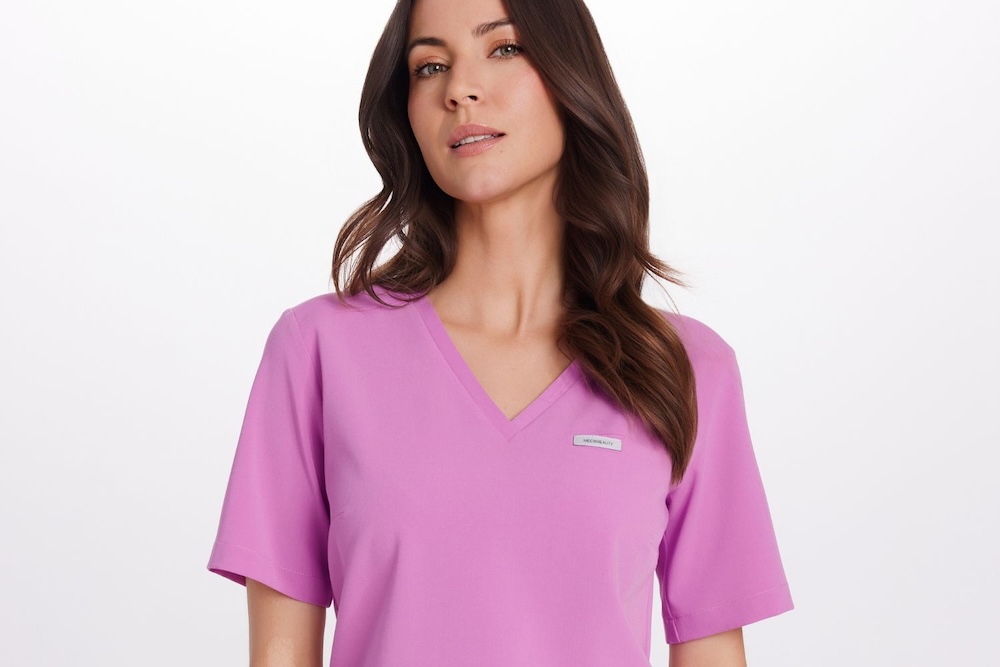
Adding lycra to our scrubs makes the material work together with the specialist’s body. As a result, the garment responds to tension when bending over or reaching for tools. The proper cut allows you to focus solely on the procedure being performed, eliminating the annoying problem of constantly adjusting the legs and pulling up the blouse. It’s simply an everyday, practical convenience.
Stain resistance and care principles
A podiatry office is a specific working environment. Contact with strong urea agents, zinc oxide ointments or ubiquitous dust during epidermis milling is simply unavoidable there. Fabrics must be characterized by high resistance to difficult soiling and trouble-free care.
In the basic collection, we combined crease-resistant polyester, viscose and lycra. In the premium line, on the other hand, you will find airy cotton with a blend of nylon and lycra. Such fiber combinations make the uniform stand up well to aggressive podiatric preparations and daily laundering.
We suggest washing the product before the first use. To maximize the life of the material and preserve its original quality, scrubs should be washed at 40°C with similar colors. We strongly discourage the use of strong detergents, bleach and tumble drying. Medical garments should also not be dry-cleaned. Ironing on the left side at up to 110°C is completely sufficient to keep the fibers looking impeccable for a long time.
Polish collections tested in practice
When creating clothing for professionals, we focus on practical yet elegant design solutions. Quality and precision workmanship are our top priority. Our own production in Poland gives us full control over every element of the creation of the collection – from the selection of appropriate threads to the final finishing of the seams.
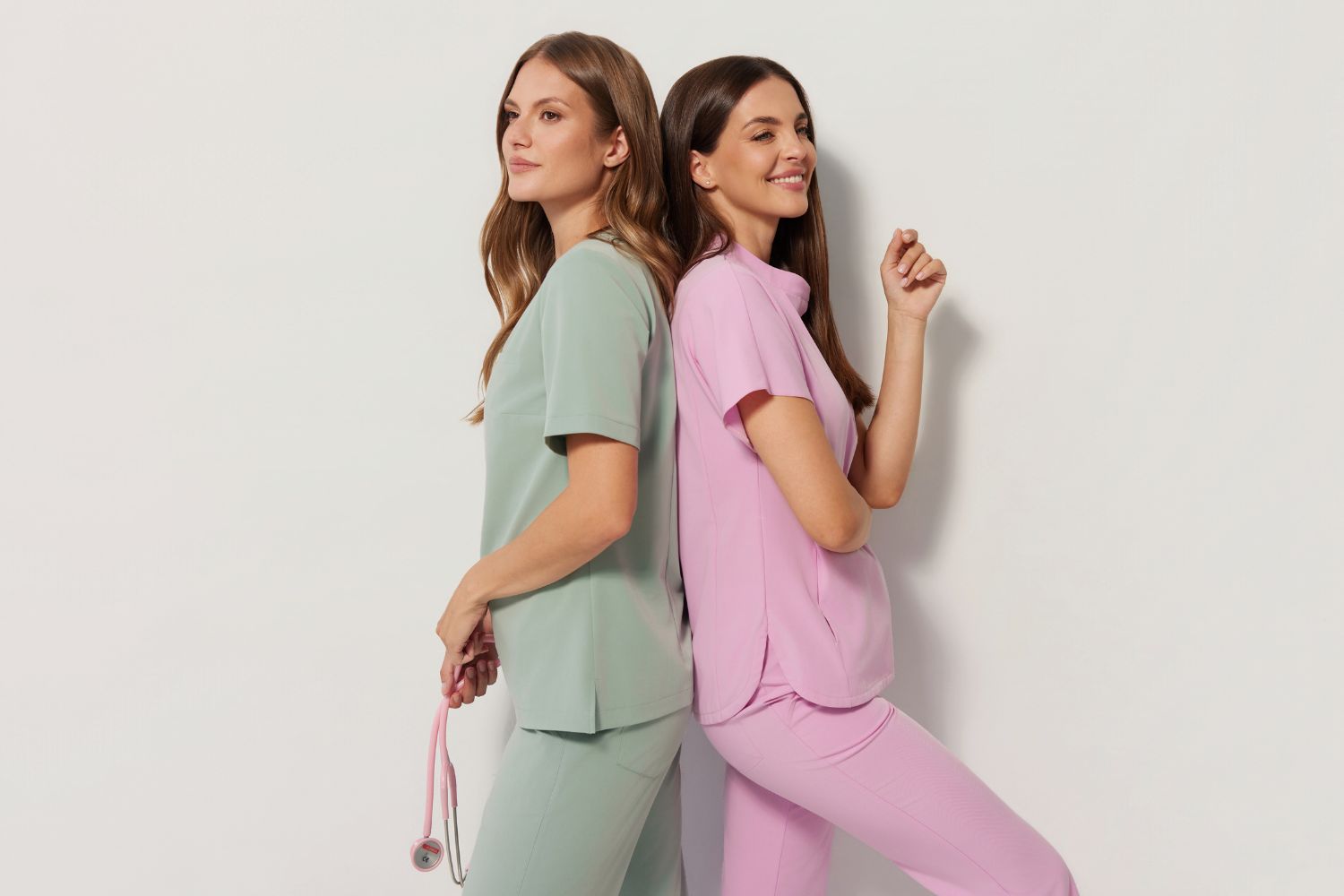
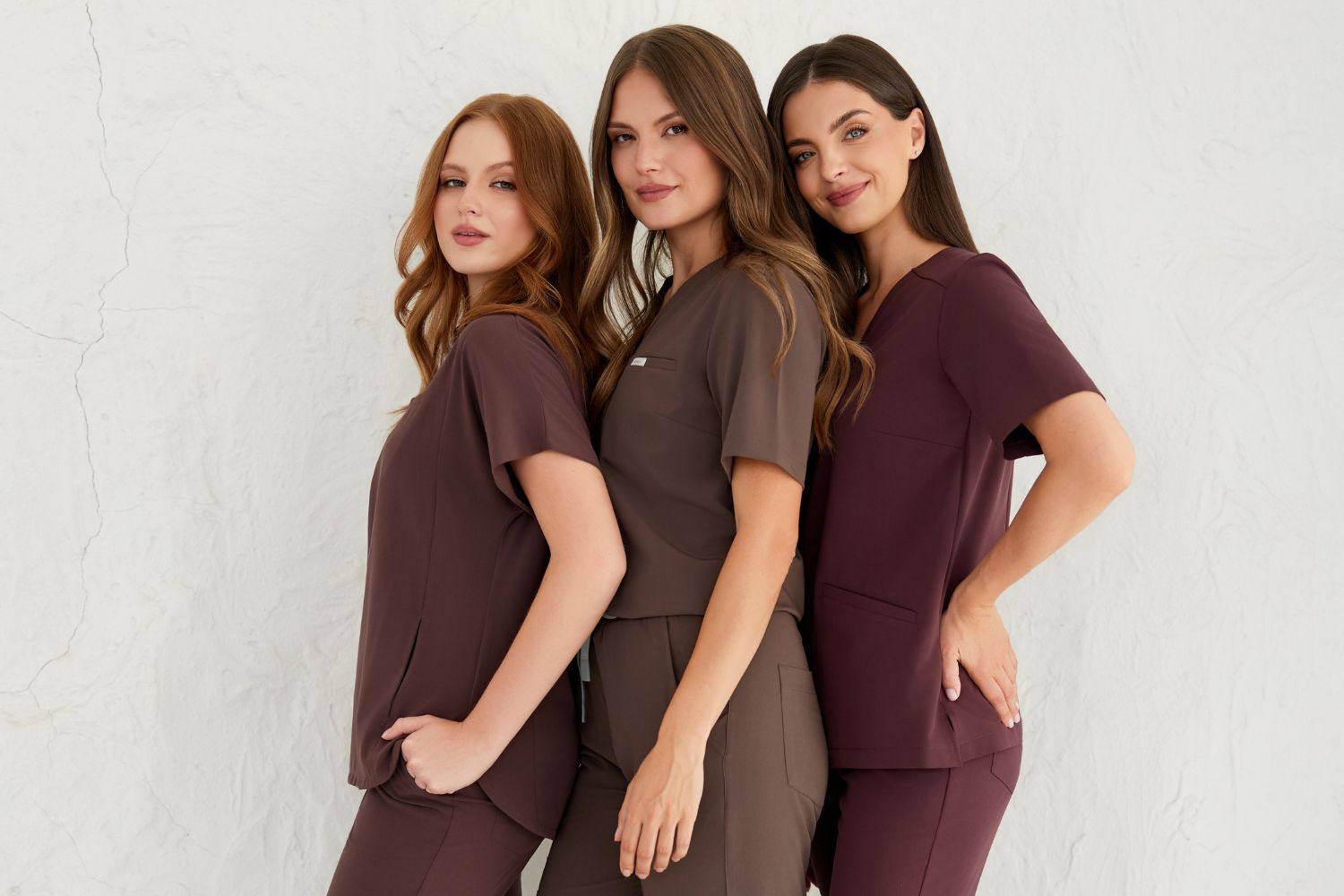
Our basic and premium line models have undergone rigorous testing with medical and beauty professionals and cosmetology students. It was after repeated meetings, rich in long discussions and exchanges of experience, that we created models that perfectly fit the needs of professionals. From the experience of our podiatric clients, we know that sets that combine rigorous medical requirements with a touch of casual lightness work well in the office. Many specialists break the classic white monotony by pairing a dark blue blouse with light gray pants to optically balance the silhouette, or by opting for a monochromatic sage total look. Even a simple detail, such as rolling up the sleeves of scrubs, gives the look a looser feel, while protecting the cuffs from milling dust buildup. On the other hand, colorful medical shoes or socks with original patterns often become a natural excuse to start a casual conversation with a new, sometimes stressed patient.
Frequently asked questions about medical clothing
What exactly is the difference between the basic line and the premium line in our offer?
- The main difference lies in the material composition used. Basic garments are made from a blend of polyester, viscose and lycra, which offers great crease resistance. The premium collection, on the other hand, is cotton, nylon and lycra – offering a slightly different, softer fabric structure, excellent breathability and a very elegant finish.
How to take care of scrubs so that they do not lose their intense color after contact with podiatric chemicals?
- The key is regularity and gentle treatment of the fabric. In addition to maintaining the optimal temperature (40°C), it’s a good idea to remember to turn the clothes inside out every time – both before throwing them in the washing machine and when ironing. This way, the fibers are less likely to rub, and colors, even those as deep as navy blue or bottle green, retain their original intensity longer.
Will polyester-containing uniforms work well in a heavily heated treatment room?
- Definitely yes! The use of the right proportions of polyester, breathable viscose and elastic lycra makes the material not only fit perfectly on the figure, but also guarantees optimal thermoregulation and dries very quickly.
Podiatry is a demanding profession – and properly selected workwear provides essential support for daily work. The right uniform makes it easier to focus on the procedure and helps build an expert image. If you are looking for solutions that will successfully survive the clash with podiatric chemistry and relieve your workload, take a look at our online store! Choose a cut in your favorite color and see how our clothing makes it easier for specialists to work with patients every day.